Church Security in Southwest Florida: The Complete Playbook
How Southwest Florida churches build hospitality-first security that actually works. Doctrine, teams, drills, and the layers that matter on Sunday morning.
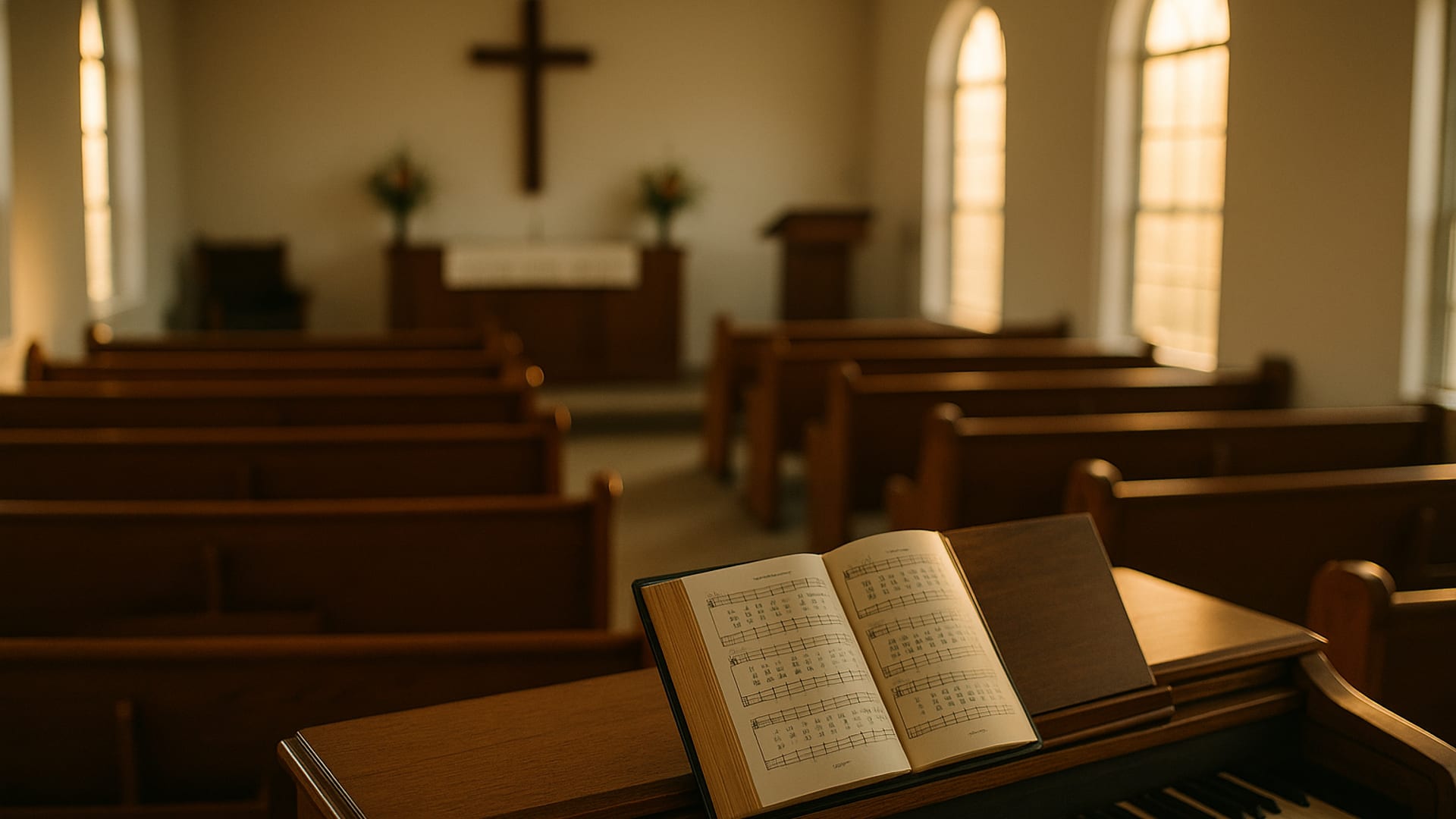
Your sanctuary door is open. That’s the point. That’s also the problem.
Every church in Southwest Florida opens its doors on Sunday morning and welcomes people it has never met. That hospitality is not a security failure. It is the mission.
The work of church security is not to close the door. It is to build every layer behind that door thoughtfully enough that an open sanctuary stays a safe one.
This is the playbook we use when we audit churches in Fort Myers, Cape Coral, Naples, and Port Charlotte. It is not comprehensive. It is directional. If you read it and come away knowing what question to ask next, it has done its job.
Why church security is a distinct discipline.
A church is not an office building with pews. The operational rhythms are different, the risk profile is different, and the people inside it assume a kind of baseline trust that no secular institution assumes.
Consider what a typical Sunday looks like in a mid-size congregation in Lee County:
- The parking lot fills in thirty-minute waves, not all at once
- Volunteers unlock doors before staff arrives, sometimes alone
- Children's ministry receives kids at three separate entry points
- A guest services team greets strangers as a matter of mission
- The offering is counted by a small team in a back office
- The main sanctuary holds the maximum crowd for exactly ninety minutes
- Staff is gone by 2 PM. The building is often still active until 9 PM
Every one of those rhythms is a security consideration, and none of them map cleanly onto a corporate facility. That’s why a generic security consultant produces a generic report for a church. It’s also why an audit done by someone who understands faith-based organizations produces something your staff will actually use.
The five layers of a Southwest Florida church perimeter.
We build every church engagement around five layers. The language is simple on purpose. The execution is where the discipline lives.
Layer 1: The Road and the Sign
Your perimeter begins before a stranger parks. The sign at the road, the state of your landscaping, and the condition of your signage tell someone what kind of organization you are. A church with a neglected lot signals one thing. A church with a clean, marked, and obviously cared-for exterior signals another.
Layer 2: The Parking Lot
This is the room most churches forget. Between the street and the front door, a visitor forms their entire first impression of your organization. It is also where most domestic disputes, medical emergencies, and conflict situations start.
For churches we work with in Cape Coral and Naples, we look at:
- Lighting uniformity (the “dark spot” behind the children’s wing is always the problem)
- Camera coverage with actual recording (not just decoys)
- Greeter presence outside the building during service hours
- A clear path for emergency vehicle access that nobody will block
Layer 3: The Lobby and Front Door
The greeter team is your detection layer. Not your hardening layer, your detection layer. Their job is to see who is arriving, welcome them, and pass information to the rest of the team when something feels off.
This is where training pays off most. An usher who knows that the flushed man pacing by the coat rack is probably in a medical emergency, not a threat, has saved a life. An usher who knows the difference between a new visitor and someone casing the facility has saved many.
Layer 4: The Interior
Once past the lobby, most churches drop their posture. That’s the mistake. The interior is where your children’s ministry lives, your offering is counted, and your senior staff works when nobody else is around.
What we look at here:
- Check-in procedures for children’s ministry (a strong check-in protocol is one of the most underrated security controls in any church)
- Access control on admin wings (most faith-based orgs over-share keys)
- A clear line of sight from the worship space to the lobby, so a security team member can see both
- The offering-count procedure, which for most Southwest Florida churches is far more predictable than it should be
Layer 5: The People
This is the real perimeter. Not the door. Not the camera. The trained usher, the volunteer who knows the protocol, the deacon who has the right conversation with a distressed visitor before the whole room notices.
People are the layer that can fail gracefully. A camera either records or doesn’t. A lock either holds or doesn’t. A trained volunteer can adapt, de-escalate, reroute, and communicate in real time. That’s why the fifth layer is the one we spend the most time on with every church client.
Building your security team: the five roles that matter.
Most Southwest Florida churches we work with don’t need a paid security staff. They need a volunteer team with defined roles, training, and a quarterly rhythm.
The Team Lead
One person. Named. Responsible. Reports to a specific pastor or elder. Has authority to make a call during service without asking.
The Greeters
Already in place at most churches. The upgrade is training. Teaching greeters what to watch for, how to communicate it, and when to escalate is often the single highest-leverage change a church can make.
The Floaters
Two or three trained volunteers who circulate during service. They are not bouncers. They are present, visible, and trained. In the rare event of a medical emergency or incident, they are the first to the scene.
The Parking Lot Volunteer
Often skipped. Shouldn’t be. A single trained person in the parking lot during the first fifteen and last fifteen minutes of service handles more than you’d expect, from fender-benders to welfare checks on visitors in cars.
The Command Contact
Someone in the office or admin area during service, with a phone and a clear line to 911, the pastor, and every other team member. If something happens, this person coordinates. They are the memory of the response.
What changed after Sutherland Springs.
On November 5, 2017, a gunman entered First Baptist Church in Sutherland Springs, Texas, and killed 26 people during a Sunday service. The nation mourned, and American churches changed.
What changed was not that every church hired armed guards. Most didn’t. What changed was that thousands of congregations finally had the conversation they had been postponing. They built safety teams. They ran drills. They wrote protocols. They met with local law enforcement.
Two years later, on December 29, 2019, a gunman opened fire during service at West Freeway Church of Christ in White Settlement, Texas. A trained volunteer member of the church’s security team stopped the attack in approximately six seconds. The after-action review became required reading for faith-based security teams across the country.
The lesson is not about armed response. The lesson is that a trained team, practiced together, with clear doctrine, makes decisions in seconds that an untrained team cannot make in minutes.
Prayer and a guard. Not one or the other. Both. The rebuilders of Jerusalem understood what many modern churches are relearning.
The Southwest Florida context.
Our region has its own shape. Hurricane exposure, a dense senior population, seasonal attendance swings, and tourism patterns all affect how a church should think about security.
Churches in Fort Myers and Cape Coral deal with seasonal attendance doubling during snowbird months, which strains volunteer teams trained for regular-season crowds. Churches in Naples often serve multi-million-dollar philanthropic relationships, which shifts the threat profile toward fraud, stalking, and targeted deception, not mass events. Churches in Port Charlotte and Punta Gorda have real hurricane shelter responsibilities that blur the line between security and emergency management in ways most doctrine doesn’t account for.
Hurricane Ian in 2022 was a clarifying moment for Southwest Florida faith-based organizations. Churches that had run tabletop exercises, maintained contact rosters, and pre-negotiated relationships with county emergency management responded well. Churches that hadn’t, didn’t.
Where to start.
If you run a church in Southwest Florida and you’re reading this because you finally got around to it, here is the short version of what to do next:
- Walk your facility this week with one question in mind: *if our first layer failed, what would our second layer do?*
- Talk to your greeters this Sunday about what they already notice. You will be surprised how much they already see.
- Pick one person to be the security point of contact. Not a committee. One person.
- Call your local sheriff or police liaison. Ask them to walk the facility with you. They will, and it will be free.
- Schedule an audit. That can be us, or not. What matters is that someone with fresh eyes reviews what you have.
A word on hospitality.
The best churches we’ve audited in Southwest Florida have a common posture. They treat security as an expression of hospitality, not a departure from it. The greeter who is trained to see more is not less welcoming. The usher who knows the protocol is not colder to visitors. The team that has rehearsed what to do in a crisis is actually warmer in normal moments, because they have the quiet confidence that comes from having thought about hard things.
Keeping the threat on the outside is how you keep the welcome on the inside. That is the doctrine, and it is what we help Southwest Florida churches build.
If your congregation is ready for that conversation, we would be honored to walk your site and listen. Most engagements with P23 Security begin with a single conversation. What happens next depends entirely on what we find, and on what you decide to do about it.
Ready when you are
Walk your sanctuary with fresh eyes.
A no-cost conversation about your congregation's safety. We listen first, recommend second, and never pressure.
Book a church conversationRelated Insights
Keep reading.
Charleston AME (2015): Hospitality Without Hardening
June 17, 2015: a gunman killed nine at Emanuel AME during a Bible study he had been welcomed to attend. What it teaches about security and welcome.
Sutherland Springs (2017): What Changed Church Security Forever
On November 5, 2017, a gunman killed 26 at a Texas church. The lessons changed how American churches think about security. Here's what actually changed, and why.
Nonprofit Security: Cash, Events, Volunteers, and the Mission You're Trying to Protect
Security for Southwest Florida nonprofits. Cash handling, event protection, volunteer vetting, donor privacy, and the risks that quietly threaten small missions.