Covenant School Nashville (2023): The Threat Assessment Gap
The March 2023 Covenant School attack in Nashville revealed a specific gap: the intersection of mental health, threat assessment, and faith-based school security.
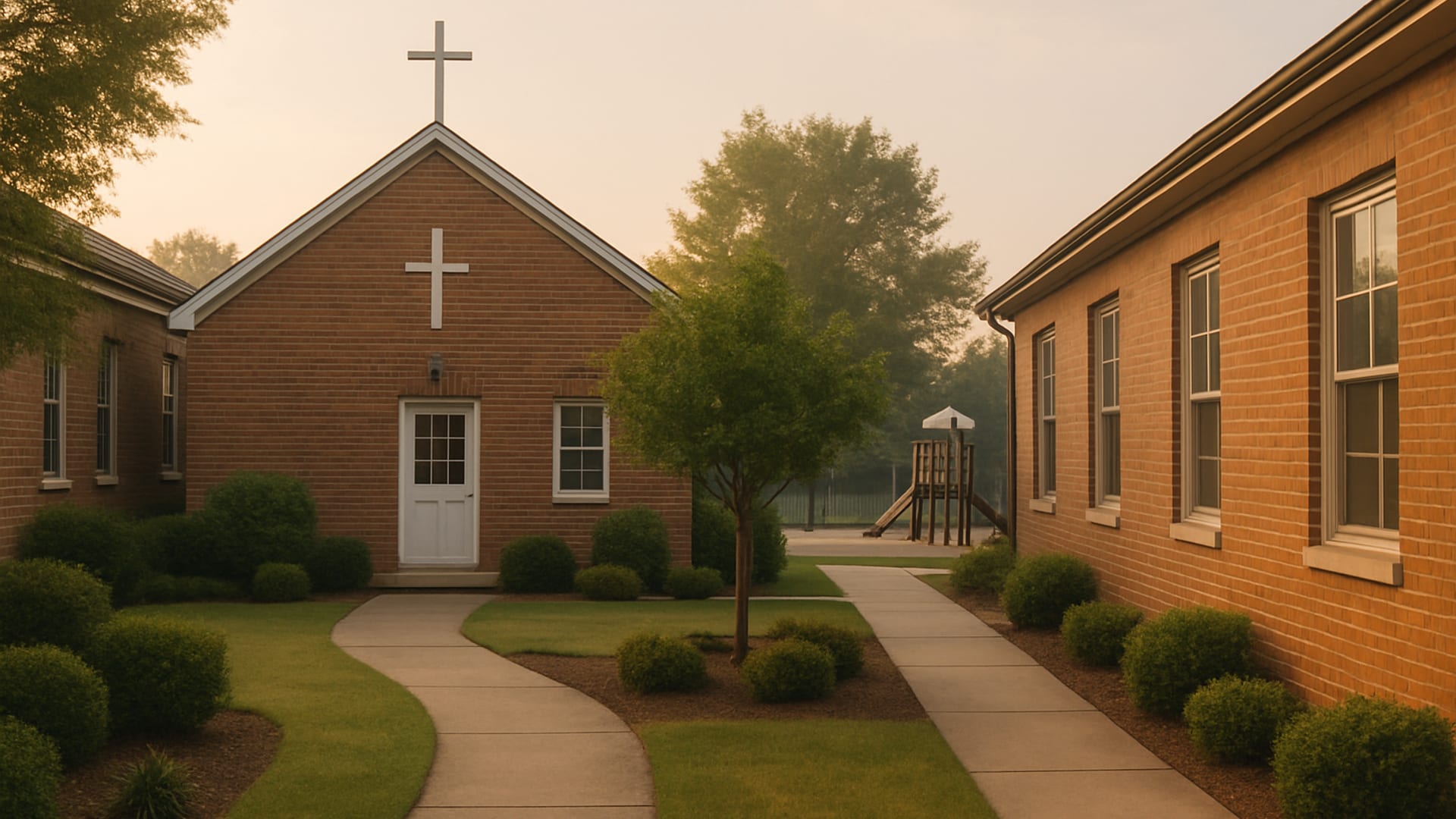
A small private Christian school.
Covenant School is a small private Christian school associated with Covenant Presbyterian Church in Nashville, Tennessee. On March 27, 2023, it enrolled approximately 200 students from preschool through sixth grade. Its morning routine on that day was unremarkable: students arriving, classes in session, the rhythm of an ordinary school week.
At approximately 10:13 AM, an armed attacker shot through a side entrance of the school and began moving through the facility. The attacker had previously attended Covenant School years earlier and had ties to the community that were documented in subsequent investigation.
Three nine-year-old students and three adult staff members were killed:
- Evelyn Dieckhaus, student
- Hallie Scruggs, student
- William Kinney, student
- Cynthia Peak, substitute teacher
- Katherine Koonce, head of school
- Mike Hill, custodian
Law enforcement responded approximately 14 minutes after the initial 911 call and engaged the attacker, who was killed in the response. The speed of the law enforcement response, contrasted with the delayed entry at Uvalde ten months earlier, was widely noted and is credited with limiting further loss.
The law enforcement response.
Before discussing the deeper threat assessment questions the case raises, the law enforcement response deserves recognition.
Metro Nashville Police officers arrived at the scene shortly after the first 911 call. Following active shooter response doctrine, officers entered the building without waiting for tactical units. They moved toward the sound of gunfire. They engaged the attacker directly. The attacker was killed within minutes of the responders entering the building.
This response contrasts sharply with the Uvalde response ten months earlier. The difference was not accident. It was training, doctrine, and the culture of the specific agency. The Nashville officers had internalized active shooter response doctrine in a way that produced action under pressure. The outcome, for those who survived, reflected that.
The response did not save everyone. Six people had already been killed by the time law enforcement could effect the engagement. It did, however, prevent the extended loss of life that sustained attacker access would have produced. The response was, in law enforcement terms, a model of what doctrine is supposed to produce.
The threat assessment gap.
The more difficult conversation concerns what happened, or did not happen, before the day of the attack.
Published reporting and subsequent public statements indicated that the attacker had a documented history of mental health treatment extending over years. The attacker had left writings and communications that, reviewed after the attack, contained specific indicators of planning and intent. Family members had, in their own later statements, indicated that concerning behaviors had emerged and had been the subject of ongoing care.
The specific question that continues to be discussed is whether, and through what processes, these indicators might have triggered intervention that prevented the attack. The conversation extends into:
- The threshold at which mental health treatment transitions into formal threat assessment
- The communication pathways between mental health providers, families, and institutions
- The specific intersection with firearms access
- The role of schools, churches, and other institutions in identifying and responding to concerning behavior by individuals connected to their community
- The legal frameworks (red flag laws, involuntary commitment, extreme risk protection orders) available for intervention
None of these questions have simple answers. All of them deserve serious attention. The Covenant case has contributed to the ongoing national conversation about how the gap between identifiable warning signs and effective intervention can be closed.
The faith-based school context.
Covenant School’s specific character as a small faith-based school deserves attention. Institutions of this type have specific features that both enable and complicate threat assessment.
Close community
Small Christian schools often have close community relationships between staff, students, and families. Multiple generations of families may be involved. Staff members may be longtime congregation members. These relationships produce early awareness of changes and concerns that larger institutions might miss.
Pastoral care culture
Churches and church-affiliated schools typically have strong pastoral care structures. Concerning situations with individuals are often handled through pastoral care first, with referral to clinical resources or law enforcement as pastoral judgment deems appropriate.
The hesitation to formalize
The close community and pastoral care culture can produce hesitation to formalize threat assessment. The culture says “we take care of our own” and “we pray through these things.” These cultural impulses are genuine and valuable. They can also produce gaps where formal assessment, information sharing, and intervention are warranted but not pursued.
The integration challenge
The specific discipline for faith-based schools is to integrate formal threat assessment with existing pastoral care rather than either replacing pastoral care or skipping formal processes. Done well, the two are complementary: pastoral care provides relationship and spiritual support, threat assessment provides structured evaluation and coordination.
What the case suggests for faith-based schools.
For Christian schools, church schools, and similar faith-based educational institutions, the Covenant case suggests specific practices:
Formal threat assessment capability
Even small schools benefit from formal threat assessment teams with training. The team may include the head of school, a mental health professional or pastoral counselor, a security advisor, and a law enforcement liaison. Meeting regularly, even in the absence of active cases, builds the capability that can address cases when they arise.
Integration with pastoral care
Threat assessment should not replace pastoral care. It should work alongside it. The pastor or pastoral care team can continue to provide spiritual and emotional support. The threat assessment team can pursue formal evaluation, coordination with mental health providers, and intervention when warranted.
Relationships with mental health providers
Establishing relationships with qualified mental health providers in the community, including those with specific training in threat assessment and violence risk, provides resources for consultation on specific cases.
Relationships with law enforcement
As with other institutions, pre-established relationships with local law enforcement enable rapid coordination when it is needed. For faith-based schools, these relationships can include specific training exercises with the responding agency.
Training in behavioral indicators
Staff training should include specific indicators of concerning behavior, appropriate escalation procedures, and awareness of the formal threat assessment process. Training should reinforce that raising concerns is an act of care, not betrayal.
Policy clarity
Written policies establishing when formal threat assessment activates, what the process involves, and what protections and responsibilities attach to involved parties provide clarity during real situations.
The victims, again named.
Evelyn Dieckhaus. Hallie Scruggs. William Kinney. Cynthia Peak. Katherine Koonce. Mike Hill.
Evelyn, Hallie, and William were nine years old.
The work we do in their memory is small compared to what was lost. It is, nonetheless, the work that remains to do.
The verse is foundational for Christian reflection on the protection of children. It is also, operationally, the charge for every institution that serves them. The protection required is more than spiritual. It is practical, patient, and specific. The work of threat assessment, properly understood, is a contemporary expression of the ancient charge.
The Southwest Florida context.
For faith-based schools, Christian schools, and church-affiliated educational institutions in Southwest Florida:
The specific population
Lee, Collier, and Charlotte counties have a substantial population of faith-based schools. Many operate with close community bonds similar to Covenant School. The specific dynamics apply across our region.
Florida’s legal framework
Florida’s laws, including provisions related to mental health commitment (Baker Act), risk protection orders, and school threat assessment, provide specific tools that faith-based schools can access. Understanding these legal frameworks is part of building threat assessment capability.
The Parkland policy environment
Florida’s post-Parkland policy environment has produced infrastructure, resources, and expertise that faith-based schools can leverage. Relationships with school threat assessment professionals, mental health consultants, and law enforcement specialists are more developed in Florida than in many states.
The interdenominational resource base
Southwest Florida has active networks of faith-based schools across denominations. Peer learning, shared training, and resource pooling can strengthen the threat assessment capability of individual schools beyond what each could develop alone.
Starting the work.
For faith-based schools in our region that have not yet developed formal threat assessment capability, a simple starting path:
- Identify the natural members of a threat assessment team from existing leadership: head of school, pastor, mental health contact, security or facility lead
- Arrange initial threat assessment training for the team (multiple providers offer this, including CISA at no cost for qualifying institutions)
- Develop a written policy describing when and how threat assessment activates
- Establish relationships with local mental health providers experienced in threat assessment
- Establish relationships with local law enforcement for active cases and threat consultation
- Begin meeting regularly, even without active cases, to build the team's capability
- Integrate the work with existing pastoral care rather than separating it
The investment in threat assessment capability is modest. The specific protection it provides, against the specific class of threats that Parkland and Covenant represent, is among the most valuable any educational institution can build.
The continuing work.
Covenant School, like the other institutions in this case study series, continues its mission. The congregation and the school have committed to their witness and their work. The memory of those who died is carried forward by those who remain.
The broader work of closing the threat assessment gap continues. Faith-based schools, public schools, and other institutions that serve young people all have parts to play. The goal is not perfect prevention. It is measurable reduction of the gap between identifiable warning and effective intervention.
If your faith-based school or children’s ministry in Fort Myers, Cape Coral, Naples, or Port Charlotte is ready to develop or strengthen threat assessment capability, we would be glad to help. The work is difficult. It is also possible, and in memory of Evelyn, Hallie, William, Cynthia, Katherine, and Mike, it is worth the honest effort.
Ready when you are
See clearly. Act proportionately.
Ongoing advisory or a one-time review. We help you read your own situation with fresh eyes.
Request an advisory callRelated Insights
Keep reading.

Access Control Audits: Who Has a Key, When They Last Used It
Access control audits are the cheapest security improvement most organizations can make. Here's how to run one and what you'll find.
Alarm System Testing: The 90-Day Rhythm
Alarm systems only work if tested. The 90-day testing rhythm catches the silent failures before they matter. Here's how to run it.

Background Check Programs for Staff and Volunteers
A serious background check program goes beyond a single pre-hire screening. Here's what a mature program looks like and how to build one.