Elopement Prevention: Doors, Wristbands, and the Human System Around Them
Wander management works when the human system around it works. How senior living facilities build elopement prevention that actually holds up.
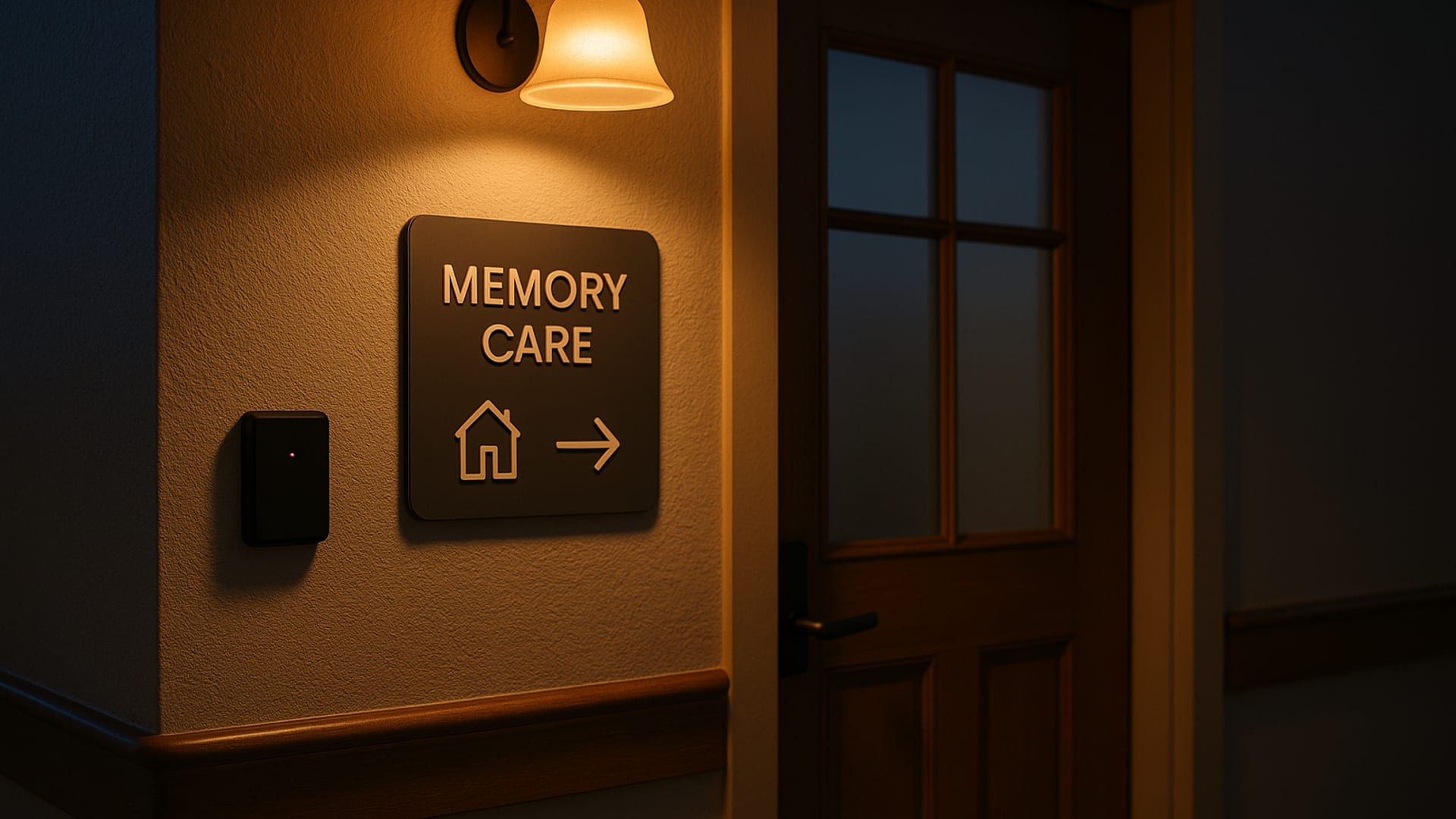
The door, the wristband, and the gap between them.
Every senior living facility serving residents with cognitive impairment has some version of a wander management system. The specific hardware varies. The concept is consistent. A door is monitored. A resident wears a wristband. An alert fires if the two come together in a way that should not happen.
The gap between the system on the wall and the program that keeps residents safe is the gap where most elopements actually happen. It is not a technology problem. It is a human system problem, and it is where serious senior living security work lives.
This article is about closing that gap. The specific elements of a working elopement prevention program, the common failure modes, and the operational rhythms that separate facilities with strong records from facilities that struggle.
Why this is the most serious recurring risk.
In broader senior living security work, elopement is often the single most serious operational risk. Not because elopement is always catastrophic. Because the consequences, when they are bad, are very bad.
A resident who leaves a memory care wing in July in Southwest Florida faces:
- Heat exposure that can produce heatstroke within an hour
- Traffic on busy roads they may not recognize
- Waterways (canals, retention ponds, pools) that pose immediate drowning risk
- The disorientation of being outside a familiar environment, which worsens rapidly
- Inability to self-identify or request help appropriately
Elopement incidents that resolve quickly produce none of these outcomes. Elopement incidents that extend past 30 to 60 minutes change character materially. The time-to-detection and time-to-recovery are the metrics that matter most.
The four components of a working system.
A wander management system is not a product. It is a program composed of four components, each dependent on the others.
Component 1: Physical access control
The doors themselves. Every exterior door on a memory care wing should have:
- A wander-management reader capable of detecting a wristband passage
- An alarm capability that notifies the staff station and selected staff devices
- A delay-egress feature where appropriate under fire code
- Physical condition that makes the door reliably closed (no propped-open state during deliveries or smoking breaks)
- Secondary layer: a staff-controlled manual lock for known escalating residents during high-risk windows
The most common failure mode at this component is the propped-open door. A delivery arrives, a staff member props the door with a cinder block, a resident walks past, and the whole system has been bypassed by operational convenience.
Component 2: Resident-side sensing
Every memory care resident at elopement risk should have a wristband or equivalent worn sensor. The worn device:
- Must be on the resident at all times, not left in the room during showers
- Needs functional batteries on a documented replacement schedule
- Must be tested when assigned and after any physical adjustment
- Should be paired with the facility’s access control system correctly
- Triggers an alert when it approaches a monitored door it is not authorized to pass
Component 3: Staff response
When an alert fires, something has to happen within seconds. This is where most facilities drift.
The specific staff response protocol should address:
- Which staff member responds first, by shift and location
- What they do at the alert point (check the door, confirm the wristband, verify the resident)
- What happens if the door has already been passed
- When and how 911 is notified (including any AHCA-required reporting thresholds)
- How family is notified, and by whom
- Documentation during and after the incident
Component 4: Rounding and observation
Between door alerts, residents must actually be supervised. Rounding schedules, sight-line management, and staff positioning all matter. Technology alerts what it sees. Staff rounds prevent the alerts from being necessary in the first place.
The common failure modes.
Having reviewed senior living elopement programs for clients across Southwest Florida, we see consistent patterns in where things go wrong.
The informally bypassed door
Most common by a significant margin. A staff member props a door for a reason that made sense to them. The door may stay propped for minutes or hours. Residents who walk past during that window are not detected.
The fix is cultural, not technological. Staff need to understand that the propped door is not a minor infraction. It is a complete system bypass.
The dead wristband battery
Wristbands use small batteries with finite life. The documented replacement schedule often slips. A resident continues to wear a wristband that has stopped functioning. Alerts never fire.
The fix is schedule discipline with written documentation, tested at every wristband transition event.
The unattended staff station
Alerts fire to a staff station. If no one is at the station, the alert fires into an empty room. The resident has already left the wing.
The fix is either continuous station coverage, parallel notification to staff mobile devices, or both. Station-only alerting without device backup is brittle.
The tested-once-a-year door
Doors get tested at installation. Then never again. Components fail silently over months and years. By the time someone notices, an incident has already happened.
The fix is quarterly door testing with documented verification. Every door, every quarter. Not optional.
The wander-eligible resident not on the list
A resident whose condition has changed and who should now be considered elopement-risk has not had their wristband assigned yet. The clinical-to-security handoff has a gap.
The fix is a documented clinical review process that triggers immediate wristband assignment when risk indicators emerge. The care plan and the security system must stay in sync.
The Southwest Florida context.
Our region introduces specific pressures for elopement prevention.
Heat and hurricane season
A Florida summer elopement has different stakes than a cold-climate elopement. Heat exhaustion and heatstroke are real risks within 30 to 60 minutes outdoors. Humidity makes recovery harder. Planning should specifically account for the Florida summer scenario.
Hurricane season adds an additional layer. Evacuations disrupt normal supervision patterns. Temporary shelters bring unfamiliar environments. Mid-event staffing changes. Post-storm relocation back to the facility can produce a period where elopement controls are reduced. Each of these is a known risk window that deserves specific planning.
Water adjacency
Many senior living communities in Southwest Florida are adjacent to canals, retention ponds, or community pools. Elopement into a water feature is a drowning risk within minutes. Facility security planning should address water-proximate elopement specifically.
Traffic
Coastal and suburban roads in Lee, Collier, and Charlotte counties often lack sidewalks or pedestrian-safe shoulders. Elopement onto an adjacent road can lead to a vehicle incident quickly. Proximity awareness matters.
AHCA regulatory context
Florida’s Agency for Health Care Administration regulates memory care facilities with specific requirements. Elopement incidents trigger reporting obligations within defined windows. Your facility’s compliance rhythm should align with current AHCA guidance, which evolves. A facility in a regular inspection cycle has one set of considerations; a facility in a heightened monitoring context may have others.
The verse frames faithful stewardship as rewarded and careless conduct as consequential. In the memory care context, the stewardship is specific. The residents cannot self-advocate in the moment that matters. The staff, the systems, and the leadership above them stand in for that advocacy. Building elopement prevention carefully is that stewardship made operational.
What a mature program looks like.
A senior living facility running a mature elopement prevention program typically has:
- Written elopement risk assessment for every resident, reviewed quarterly
- Wristband assignment tied to care plan, updated when clinical status changes
- Quarterly testing of every monitored door with written documentation
- Wristband battery replacement on a fixed rotating schedule with log
- Written response protocol rehearsed at least annually with all shifts
- Active rounding schedule with position-based supervision during high-risk windows
- Documented after-action review of every elopement and near-miss
- Integration with AHCA reporting requirements and internal incident review
- Relationship with local law enforcement and specific response plan for community search
Organizations with this level of rigor tend to have zero serious elopement incidents in multi-year stretches. Organizations with gaps in any of the above components tend to experience proportional risk.
The staff culture piece.
Underneath every working elopement program is a staff culture that takes the program seriously. The technical controls can be excellent, but if frontline staff view them as inconvenient obstacles, the controls will be worked around.
Culture is built through:
- Leadership naming elopement as a top-three priority consistently
- Training that explains why protocols exist, not just what they are
- Recognition for staff who catch near-misses and surface them for review
- Accountability when protocols are informally dropped, applied consistently without shaming
- Regular visible evidence that leadership pays attention (monthly memo reviews, quarterly rehearsals)
Facilities where staff privately believe elopement controls are bureaucratic obstacles produce elopement incidents. Facilities where staff believe the controls are keeping residents safe produce fewer incidents. The belief is shaped deliberately, over time.
Where to start.
For a facility leader reading this and wondering where to begin:
- This week: test every door in your memory care wing. Note which work, which do not, which have never been tested.
- Pull your wristband roster. Confirm every at-risk resident has a functioning wristband, right now, today.
- Walk the wing during shift change. Observe how alerts would be received at the busiest handoff window.
- Schedule a tabletop exercise this quarter focused on an elopement scenario, including hurricane-season variants.
- Review your last three elopement incidents or near-misses. If you cannot name them, that itself is a finding.
The work worth doing.
Elopement prevention is not the most visible part of senior care. It is among the most consequential. Residents in memory care trust the facility with a level of stewardship that no other population trusts any other institution with. That stewardship earns the careful work of keeping the doors, the wristbands, and the human system around them all functioning together.
If your senior living facility in Fort Myers, Cape Coral, Naples, or Port Charlotte wants a fresh look at its elopement prevention program, we would be glad to conduct that review. The work is patient, the findings are specific, and the improvements produce measurable risk reduction for the residents who cannot advocate for themselves.
For a broader view of senior living security, read our pillar article on wandering, visitors, and the emergency you didn’t plan for. For the operational side of access control generally, see our piece on access control audits.
Ready when you are
Quiet risks deserve steady attention.
We walk your facility during real operational hours and tell you plainly what we see. Elopement, visitors, emergencies, all considered.
Request a facility walkRelated Insights
Keep reading.

Medication Room Security: The Overlooked Access Control Problem
Medication rooms in senior living are high-value, high-risk spaces. Narcotics diversion, shift-change gaps, and access drift need specific security discipline.
Senior Living Security: Wandering, Visitors, and the Emergency You Didn't Plan For
Security for assisted living and memory care in Southwest Florida. Elopement prevention, visitor control, fall response, and hurricane-season readiness.

Church Security in Southwest Florida: The Complete Playbook
How Southwest Florida churches build hospitality-first security that actually works. Doctrine, teams, drills, and the layers that matter on Sunday morning.