West Freeway Church, 2019: Six Seconds, a Trained Team, and What We Learned
December 29, 2019: a trained volunteer security team stopped an active shooter in about six seconds. Here is what the case teaches modern church security.
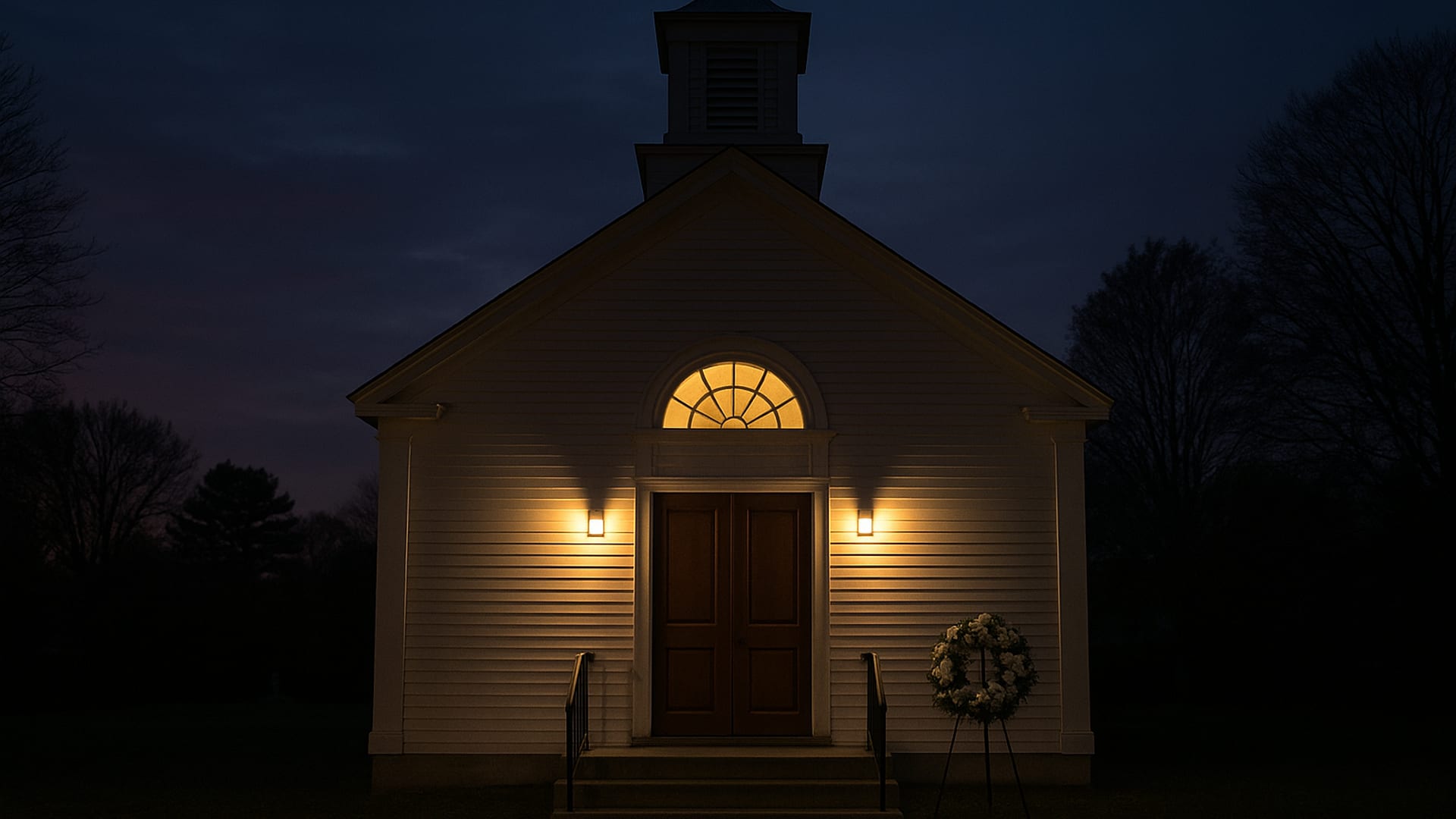
The last Sunday of 2019.
It was December 29, a Sunday morning service at West Freeway Church of Christ in White Settlement, Texas, a small suburb of Fort Worth. About 240 people were gathered for communion when a man sitting in the back stood up, drew a shotgun from under a coat, and began to fire.
Within seconds, two men were fatally wounded. Deacon Anton “Tony” Wallace had been serving communion and was the first to be shot. Richard White, a parishioner, stood and was struck shortly after. Both men died from their wounds.
In the same seconds, Jack Wilson, the head of the church’s volunteer security team and a former reserve deputy, drew his firearm and fired a single shot. The attacker collapsed. From the first shot fired by the attacker to the final shot that ended the attack, the entire event took approximately six seconds.
The church released the live-streamed video publicly shortly after. West Freeway became one of the most directly observable case studies in American church security.
Who Richard White and Anton Wallace were.
Before any analysis, the two men who died deserve to be named. Richard White and Anton “Tony” Wallace were members of the congregation who served each other and their church. Tony Wallace had been a deacon serving communion when the attack began. Richard White stood between the attacker and his own wife.
Their deaths are the context within which the lessons of this case are read. The teaching that follows is not about celebrating a response. It is about honoring their loss by building the kind of preparation that gives other communities a better chance in similar moments.
What the team had done before December 29.
West Freeway’s security team was not organized in the month before the attack. It had been developing over years.
Several elements had been built into the team’s routine operations:
- Named security team with defined roles and a designated leader
- Regular weekly presence during services
- Rehearsed positions within the sanctuary with clear lines of sight
- Training in active threat doctrine, decision-making, and tactical principles
- Firearms training for team members authorized to carry
- Coordination procedures for communicating among team members during an event
- Relationships with local law enforcement and established response protocols
Jack Wilson himself was a firearms instructor and former reserve deputy. Several other team members had law enforcement, military, or security backgrounds. The team’s training had been serious, sustained, and specific to the facility.
This is the detail that matters. The response took six seconds. The training that made the response possible took years.
The doctrinal decision.
Prior to 2017, the church security community had been divided on armed response. Sutherland Springs in November 2017 accelerated a shift in many congregations. The West Freeway response in 2019 became, for many, a proof point in that shift.
The proof was not, however, simply about whether armed volunteers are appropriate in church. The deeper proof was about preparation.
West Freeway’s team would have been more effective with training whether armed or unarmed. The unarmed version of their team would still have evacuated congregants, denied the attacker further access, provided medical response, and maintained coordination with law enforcement. That team would have had a different outcome, but it would have been a trained outcome.
The central lesson of the case is not the weapon. It is the training.
What the video shows.
The video is painful to watch. It shows two men losing their lives. It shows a sanctuary of ordinary people experiencing an event no one should experience. It also shows, in unambiguous detail, what a trained team does.
Details visible in the video include:
- The security team had positioned itself to maintain sight lines to the entire sanctuary
- When the attacker began to move toward his weapon, multiple team members reacted before the first shot
- Jack Wilson’s response was immediate, controlled, and ended the threat with a single shot
- Additional team members moved to secure the attacker’s weapon, evacuate the congregation, and begin medical response
- Communication with law enforcement and medical personnel began within seconds
Each element of what worked was something the team had practiced. Positioning. Reaction speed. Precise action. Follow-through. The pattern is not a miracle. It is a rehearsal producing its intended outcome.
What the case does not settle.
The West Freeway case is frequently invoked in arguments about specific policy choices. It does not, in our reading, settle most of them.
Does every church need armed volunteers?
No. Most churches in Southwest Florida do not have team members with the background, training time, or legal clarity to safely deploy armed response. A well-trained unarmed team with strong protocols, clear communication, excellent evacuation, and good medical response will serve most congregations well. Arms should be considered deliberately, not automatically.
Can trained response always stop an attack?
No. West Freeway was, in part, the result of the attacker using a shotgun in a confined space where team members had line of sight. A different weapon, a different tactical approach, or a different facility geometry would produce a different outcome. Training dramatically improves response but does not guarantee outcomes.
Is this just about the security team?
No. The response at West Freeway also depended on congregation members who ducked quickly, ushers who moved to check on the wounded, and a broader culture of attentiveness that the church had built over years. Security is a team effort that extends beyond the formal team.
The Southwest Florida application.
Our region has its own shape for church security. Many SWFL congregations are in the range of 50 to 800 weekly attendance, with volunteer-heavy operations and significant seasonal attendance variation. Most have strong community ties and open-door hospitality traditions.
What West Freeway suggests for these congregations:
- Form a named safety team with a designated leader, even if small
- Train the team together, regularly, in doctrine and decision-making
- Rehearse specific scenarios relevant to your facility (sanctuary, lobby, children's wing)
- Build relationships with local LE and EMS before you need them
- Develop evacuation and denial protocols for every zone of the facility
- Invest in medical response capability (Stop the Bleed, CPR, AED)
- Address the armed-vs-unarmed question deliberately, with legal and insurance input
- Prepare for emotional and spiritual aftercare, because the response does not end when the threat ends
The pattern of work is not dramatic. It is patient, regular, and unglamorous. It is also the pattern that, in our direct experience across the churches we serve, produces teams capable of meeting the hardest moments with competence.
The rebuilders of Jerusalem worked with one hand and held their weapons with the other. They built while being ready. The call is not about weapons specifically. It is about the integration of the work and the watchfulness. Churches that integrate hospitality and preparation in the same posture, as Nehemiah’s builders did, walk into difficult moments more capable than those that treat the two as opposing values.
The aftercare piece.
The West Freeway response ended the threat in six seconds. The aftercare for the congregation took months and is in some ways ongoing.
Immediate medical response. Communication with families. Pastoral care for witnesses, including children. Media management. Legal proceedings. Counseling for the security team members, some of whom carry the weight of the incident permanently. Community outreach to neighbors and other congregations. Continued ministry to the families of Richard White and Tony Wallace.
A complete church security program includes aftercare planning. Who will lead it. What resources are available. How to reach counselors, chaplains, and specialists familiar with mass trauma response. Which decisions need to happen immediately and which can wait. Most churches have not thought through this layer until an event forces them to. By then, improvising is costly.
The lessons that travel to every congregation.
Three lessons carry, regardless of denomination, size, or context.
First: preparation changes everything.
West Freeway is the clearest available evidence that a trained volunteer team can make a decisive difference in the opening seconds of an active threat. Whether armed or unarmed, the trained team outperforms the untrained team by margins that matter.
Second: practice is non-negotiable.
Knowing doctrine is not the same as executing it. Reading about Avoid, Deny, Defend does not produce the muscle memory that moves a security team into position before the first shot. Only rehearsal does. The team at West Freeway had rehearsed for years.
Third: the aftermath is part of the response.
A complete plan does not end when the threat is neutralized. It includes medical, spiritual, legal, operational, and community-level aftercare. The organizations that plan for this in advance handle it better when it arrives.
For our region.
If your church in Fort Myers, Cape Coral, Naples, or Port Charlotte does not yet have a trained safety team, the lesson of West Freeway is both sobering and encouraging. Sobering because the work required is real and sustained. Encouraging because it is clearly possible. Churches across the country, including many in our own region, have built capable teams. The path is available.
We would be glad to help walk it with you. A first conversation is no-cost. What happens after depends on what you find and what you decide to do. In memory of Richard White and Anton Wallace, the work of preparation is worth doing. It is worth doing before.
Ready when you are
Train the response before the day that tests it.
Taught by a combat veteran, sized for civilians. Role-appropriate, scenario-based, respectful of the people in the room.
Plan a training sessionRelated Insights
Keep reading.
Avoid, Deny, Defend: The Doctrine Everyone Should Know
Avoid, Deny, Defend is the civilian doctrine for active threats from Texas State's ALERRT program. Here's what it is, why it matters, and how it gets taught.
Pediatric Triage: What Daycares and Children's Ministries Need to Know
Children are not small adults. Pediatric triage uses different protocols and thresholds. Here's what daycare and children's ministry staff should know.

Priorities of Life in a Mass-Casualty Moment
In a mass-casualty moment, care is given by priority, not by sequence. Here's how civilian responders think about who to help first, and why.